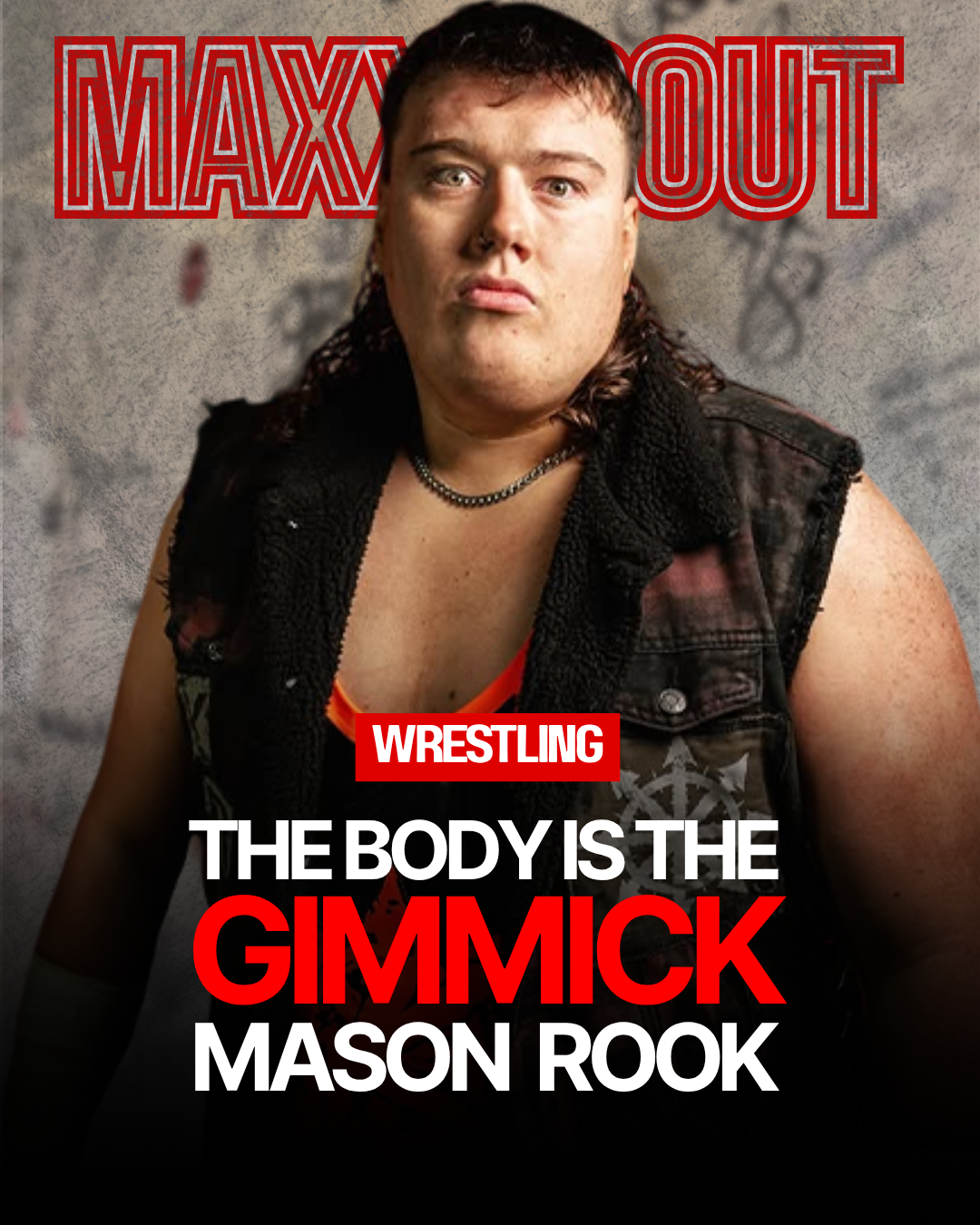
# The Body Is the Gimmick The first time you see Mason Rook walk out, your brain does the thing it always does. It runs the silhouette against the prospect template — the lean cut, the cosmetic shoulders, the calf taper, the photogenic walk to the ring. And it doesn't match. He doesn't look like an NXT call-up. He looks like a guy who got bumped from the front row and decided to stay. That reaction is real. It's not unfair, it's not gatekeeping, it's the exact pattern recognition the developmental brand has trained on its audience for fifteen years. NXT has a look. NXT prospects have a body. You know the body when you see it because they've shown it to you a thousand times. So the read lands. The new guy doesn't fit. And that's where you slow down for a second. Because if you've watched wrestling long enough, there's a separate file in your head — a smaller, rougher one — and it has different names in it. Bruiser Brody, who looked like he came up out of the floor of a bar fight. Stan Hansen, who couldn't see and didn't care and dragged his bell-hat into the ring like he forgot the cattle outside. Luke Harper, who moved like a man who hadn't been allowed in a building in years. Necro Butcher, where you weren't even sure where the gimmick stopped. Early Samoa Joe, before anyone got the idea to run him through the protein-powder pipeline. The wrestlers who looked like they hurt people for a living instead of looking like they trained to look like they hurt people. That file isn't full. It's never been full. It exists because every so often the business decides it needs that exact type of guy, and finding one is harder than finding the prospect-body version, because you can't gym your way into looking unsettling. You either read like someone who shouldn't be in the room or you don't. Mason Rook reads like someone who shouldn't be in the room. And once you put him in that file instead of the prospect file, the optics critique starts doing something strange. It doesn't get refuted. It gets repurposed. This is also worth saying out loud, because the conversation around bodies in wrestling almost always collapses into the small-guy debate, and that's not what this is. Rook isn't undersized. He's un-sculpted. Different axis entirely. The undersized debate is about whether a smaller man can be presented as a credible threat against bigger men. The un-sculpted debate is about whether someone can be presented as a credible threat without first being aestheticized into the shape audiences are trained to read as "wrestler." Those questions don't share a frame. Conflating them is how you end up writing a defense of the wrong character. Which brings up the thing that's actually doing the work here, the thing that should make anyone watching pause before they file the debut under miscast. NXT chose this. The brand whose entire identity for years has been built around prospect aesthetics — the photo shoots, the gear design, the lean visual grammar of "future star" — looked at this exact body and decided yes, debut. Not as a comedy piece. Not as a one-night anomaly. As a guy walking straight into the champion in his opening salvo. That contrast isn't an accident the booking has to apologize for later. That contrast is the booking. The thing the brand always presents and the thing it has now decided to present against itself, sitting in the same frame at the same time, is the entire visual argument the character is making before he ever talks. Tony D'Angelo as the first target tightens the bolt. D'Angelo is polished. Italian-mob suiting, the slick haircut, the body. He's the developmental brand's idea of finished product. Putting Rook on him in the debut is the cleanest possible declaration of what the gimmick actually is. The visual contrast is the story before the match is the story. Champion vs. challenger is the surface read. Sculpted vs. unsculpted is the real one. And the second your eye registers the second pairing, the first one starts feeling like decoration. If you've read this far and you're still on the fence, that's the place to hold the question — not in whether he "looks like a wrestler," but in what the body is doing inside the booking. Does the contrast read as a flaw the brand has to overcome, or as a feature it's deliberately deploying? Worth pushing on, because the answer changes how you watch every appearance from here forward. The thesis, then. The thing the optics critique misses isn't whether Rook looks the part. It's that the part has changed. The body isn't a problem the booking has to solve. The body is the booking. The anti-aesthetic isn't a hurdle. It's the threat vector. He's a credible problem inside an NXT ring specifically because he doesn't carry the silhouette the rest of the locker room is graded against. He breaks the visual sentence. That's the whole gimmick. Which is also the place this can fail, and it has to be named, because honest forensics names the failure mode. The character collapses the day WWE loses its nerve. The day someone in a production meeting decides he needs to tighten up. The day a stylist starts looking for his version of the prospect cut. The day the haircut gets a little cleaner, the gear gets a little sharper, the press shots start hitting a softer light. None of those things are a fix. All of them are surrender. The aesthetic is load-bearing. You can't sand it down without sanding the threat off with it. That's the bet on the table. The bet isn't whether Rook can wrestle, or whether the NXT crowd will turn on him, or whether the feud lands. The bet is whether the people running the brand can keep their hands off the look long enough for the look to do what it's been built to do.